Reclamation urges Central Valley Project contractors to prepare for potential fourth dry year
he Bureau of Reclamation is asking its contractors receiving Central Valley Project water for municipal and industrial use to begin planning for potentially extremely limited water supply conditions in 2023. Despite the early storms that California experienced this month, drought conditions continue. Conservative planning efforts will help better manage the limited water resources in the event conditions remain dry and we move into a fourth consecutive drought year.
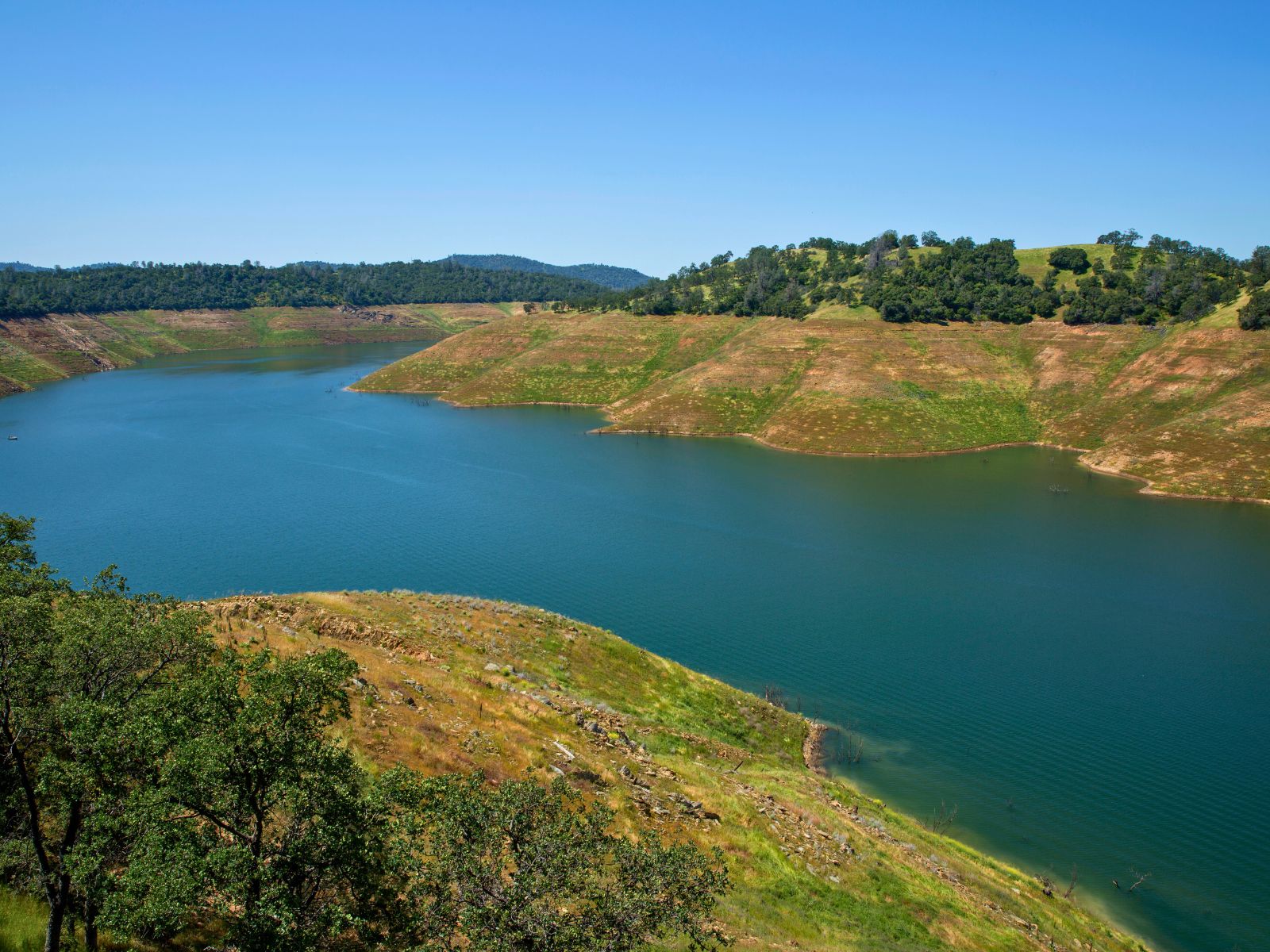
The Central Valley Project began the 2023 water year on October 1 with water storage reservoirs near historic lows. Shasta Reservoir, the state’s largest reservoir and cornerstone of the Central Valley Project, is currently at 31% capacity. If drought conditions extend into 2023, Reclamation will find it increasingly difficult, if not impossible, to meet all the competing needs of the Central Valley Project without beginning the implementation of additional and more severe water conservation actions.
Under Reclamation’s Municipal & Industrial Water Shortage Policy, Central Valley Project municipal and industrial contractors are asked to provide specific information to calculate public health and safety numbers using the standard calculation outlined in the Central Valley Project Municipal and Industrial Water Shortage Policy Guidelines and Procedures.
Reclamation continues to closely monitor hydrologic conditions and will provide regular updates in the coming months. Initial water supply allocations for the Central Valley Project will be announced in February.
Central Valley Project begins 2023 water year with 3.6 million acre-feet of storage
SACRAMENTO, Calif. – After a third straight year of severe drought, the Bureau of Reclamation’s Central Valley Project begins the 2023 water year with 3.6 million acre-feet of water in storage — one of the lowest starting points in recent years. The CVP’s major reservoirs are (from north to south) Trinity, Shasta, Folsom, New Melones, Millerton, and the federal share of San Luis Reservoir. The water year begins Oct. 1 each year and ends Sept. 30.
“The 2022 water year was wetter than 2020 and 2021 in some areas of the state, but it was still well below average and came on such a large water supply deficit that it earned the title as the worst three-year drought on record with some of the driest winter months on record,” said Ernest Conant, regional director of the California-Great Basin region. “In order to navigate through this record-breaking drought, we had to modify operations outside of those considered in previous droughts and take a fresh look at every component of the CVP including facilities, contractors and environmental requirements.”
The 2022 water year began with an atmospheric river that brought record rain to Northern California in October 2021. That was a followed by a blast of winter storms in December that produced more than 6 feet of Sierra snow by the end of the month. Then, the storm door slammed shut, ushering three months of record dryness in northern California. The snowpack, vital to the state’s water supply, was virtually non-existent by April 1.
Reclamation responded with a 0% allocation to CVP agricultural contractors, an agreement to significantly reduce releases from Shasta and Trinity reservoirs to prioritize storage conservation and temperature management, reducing deliveries to Sacramento River Settlement Contractors, and releasing water from Friant Dam to fulfill obligations to senior water right holders, the San Joaquin River Exchange Contractors.
The table below shows reservoir capacities and end-of-year storage amounts for water years 2021 and 2022 for major CVP reservoirs. The following table compares end-of-year storages from water year 2017 to 2021. The amount of stored water at the end of the water year reflects the amount carried over into the new water year.
|
CVP Reservoir (Million Acre-Feet) |
Total Capacity (Million Acre-Feet) |
2022 WY Ending Storage (Million Acre-Feet) |
2021 WY Ending Storage (Million Acre-Feet) |
|---|---|---|---|
| Trinity | 2.45 | .55 |
.71 |
| Shasta | 4.55 | 1.51 |
1.08 |
| Folsom | .97 | .34 |
.23 |
| New Melones | 2.42 | .61 |
.84 |
| Federal San Luis | .96 | .24 |
.04 |
| Millerton | .52 | .34 |
.31 |
| Total | 11.8 | 3.6 |
3.21 |
Comparison of Previous End-of-Year Storage in Major CVP Reservoirs (Million Acre-Feet)
|
Year |
2022 |
2021 | 2020 | 2019 |
2018 |
2017 |
1977(Driest Year) |
1983 (Wettest Year) |
| Total | 3.6 | 3.21 | 6.01 | 9.02 |
6.8 |
10.3 |
1.5 |
9.8 |
In anticipation of continued drought in 2023, Reclamation will pursue a water management strategy that emphasizes providing supplies for health and safety needs; maintaining suitable water quality in the Delta, which is the source of municipal drinking water for many communities; protecting species by meeting environmental requirements; conserving storage to meet future critical needs; and urban and agricultural water supplies.
The CVP is the largest single source of irrigation water in California, typically supplying water to about 3 million acres of agricultural land in the San Joaquin and Sacramento valleys. The CVP also provides urban water for millions of people and industrial water, including that essential to the San Francisco Bay Area’s economy. Water from the CVP is also vital for the environment, wildlife and fishery restoration, including providing water to 19 refuges in the Central Valley, and hydroelectric power production.
During the 2022 water year, CVP powerplants generated about 2 billion kilowatt-hours, very much below an average year of about 4.5 billion kilowatt-hours. Project use is anticipated to have consumed about 20 percent of this energy; the remaining energy was made available to public agency contractors serve by the Western Area Power Administration.
Reclamation continues to work with federal and state partner agencies and CVP water and power customers to prepare for potentially ongoing drought conditions. Another consecutive dry water year will require conservative planning and assertive multiagency action.
For additional storage information, visit www.usbr.gov/mp/cvo; for additional information on the 2022 water year, visit www.usbr.gov/mp/drought.
Reclamation outlines initial 2022 water allocations for Central Valley Project contractors
Sacramento, Calif. – Today, the Bureau of Reclamation announced initial 2022 water supply allocations for Central Valley Project contractors. Allocations are based on an estimate of water available for delivery to CVP water users and reflect current reservoir storages, precipitation, and snowpack in the Central Valley and Sierra Nevada. This year’s low allocations are an indicator of the third consecutive dry year California is experiencing and will be updated if conditions warrant.
“We began the 2022 water year with low CVP reservoir storage and some weather whiplash, starting with a record day of Sacramento rainfall in October and snow-packed December storms to a very dry January and February, which are on pace to be the driest on record,” said Regional Director Ernest Conant. “Further, the December storms disproportionately played out this year in the headwaters—heavy in the American River Basin and unfortunately light in the upper Sacramento River Basin, which feeds into Shasta Reservoir, the cornerstone of the CVP.”
Currently, CVP reservoir storage is below the historic average for this time of year and runoff forecasts predict that overall storage will be limited if substantial spring precipitation does not materialize. California Department of Water Resources’ forecast update from Feb. 1 to Feb. 15 shows a total decrease in projected annual inflow to Shasta, Oroville, Folsom, and New Melones reservoirs of 1.2 million acre-feet. Without significant precipitation, this may continue to decrease further.
“Losing over a million acre-feet of projected inflow in two weeks’ time is concerning,” said Regional Director Conant. “We’ve got our work cut out for us this year; strengthened collaboration and coordination among agency partners, water and power users, and stakeholders will be instrumental.”
Based on current hydrology and forecasting, Reclamation is announcing the following initial CVP water supply allocations:
North-of-Delta Contractors
Sacramento River
- Irrigation water service and repayment contractors north-of-Delta are allocated 0% of their contract total.
- Municipal and industrial water service and repayment contractors north-of-Delta will be provided water for public health and safety needs consistent with the CVP M&I Water Shortage Policy.
- Sacramento River Settlement Contractors’ water supply is based upon settlement of claimed senior water rights and the 2022 water year is currently designated as a critical year, as defined in their Settlement Contracts.
American River
- M&I water service and repayment contractors north-of-Delta who are serviced by Folsom Reservoir on the American River are allocated 25% of their historical use.
In-Delta Contractors
- M&I water service and repayment contractors who are serviced directly from the Delta are allocated 25% of their historical use.
South-of-Delta Contractors
- Irrigation water service and repayment contractors south-of-Delta are allocated 0% of their contract total.
- M&I water service and repayment contractors south-of-Delta are allocated 25% of their historical use.
- For San Joaquin River Exchange Contractors and San Joaquin Settlement Contractors, the 2022 water year is currently designated as a critical year, as defined in their contracts.
Wildlife Refuges
- For water supply for wildlife refuges (Level 2), north- and south-of-Delta, the 2022 water year is currently designated as a critical year, as defined in their contracts.
Friant Division Contractors
- Friant Division contractors’ water supply is delivered from Millerton Reservoir on the upper San Joaquin River via the Madera and Friant-Kern canals. The first 800,000 acre-feet of available water supply is considered Class 1; Class 2 is considered the next amount of available water supply up to 1.4 million acre-feet. Given the current hydrologic conditions, the Friant Division water supply allocation is 15% of Class 1 and 0% of Class 2.
Water supply allocations for Eastside irrigation and M&I water service and repayment contractors will be announced in May per their contracts.
M&I contractors whose water service and repayment contracts cite the CVP M&I Water Shortage Policy may request a public health and safety adjustment within 30 days of initial allocations consistent with that policy.
As the water year progresses, changes in hydrology and opportunities to deliver additional water will influence future allocations. Reclamation will continue to track hydrology and may adjust basin-specific allocations if conditions warrant an update. Water supply updates are posted on Reclamation California-Great Basin Region’s website.
NOTICE OF DIRECTOR VACANCY DIVISION 4 and 6
Pursuant to California Government Code §1780, the Central San Joaquin Water Conservation District hereby notices a vacancy on the Board of Directors for Division 4 and 6. The Board may act to fill the vacancy no earlier than fifteen (15) days from the date of this notice.
If you have any questions please contact the District at (209) 466-7952.